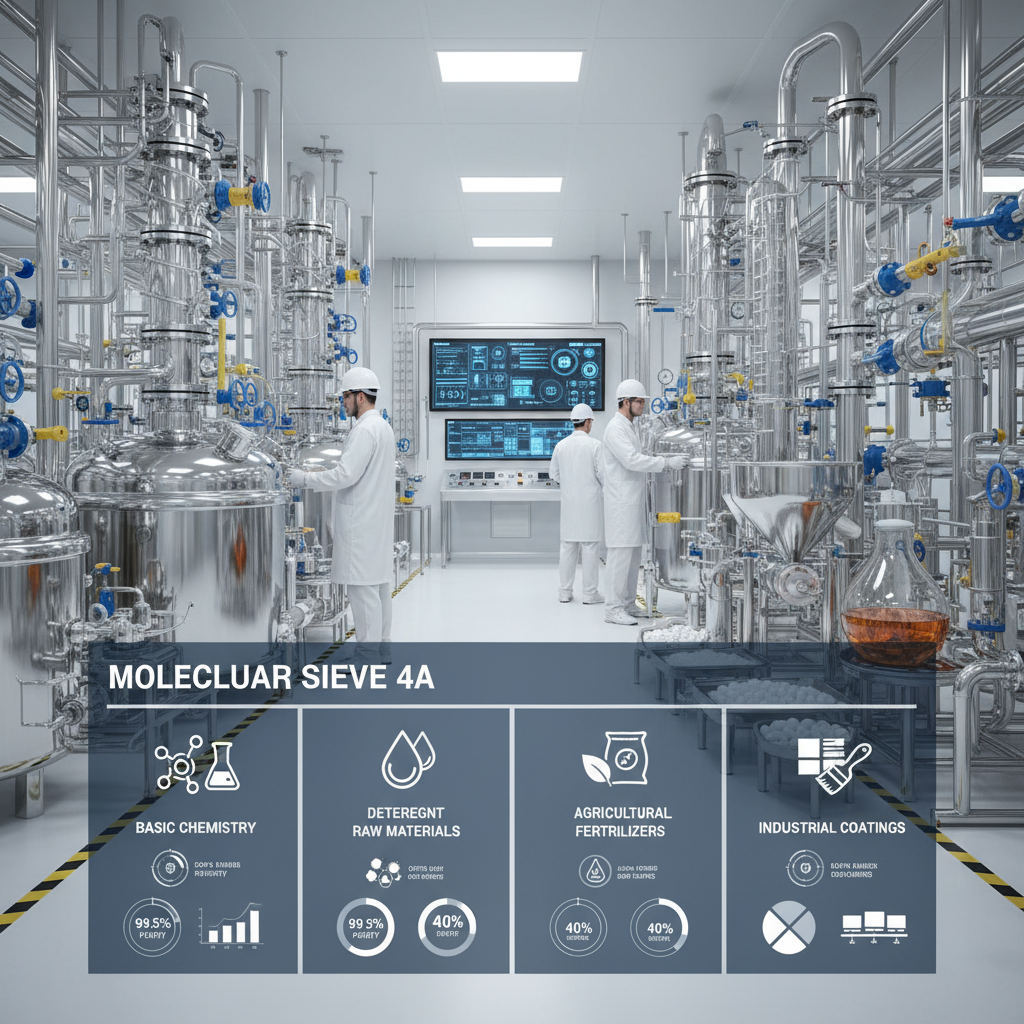
In the complex landscape of industrial dehydration and purification, Molecular Sieve 4A stands as a critical cornerstone for ensuring product purity and operational efficiency. As a synthetic zeolite with a precise pore size of approximately 4 angstroms, it is engineered specifically to adsorb water molecules while excluding larger organic molecules, making it an indispensable tool in chemical processing. Understanding the nuances of its application allows industries to maintain stringent quality standards and prevent costly contamination in high-stakes environments.
The global demand for high-efficiency desiccants has surged as petrochemical, pharmaceutical, and energy sectors strive for greater precision. Molecular Sieve 4A addresses the critical challenge of moisture removal in sensitive feeds, preventing catalyst poisoning and equipment corrosion. By leveraging its unique crystalline structure, manufacturers can achieve dew points that traditional desiccants simply cannot reach, ensuring that downstream processes remain stable and predictable.
Beyond mere drying, the strategic implementation of these molecular sieves contributes to significant sustainability goals by reducing waste and optimizing energy consumption during regeneration cycles. Whether utilized in the purification of ethanol or the dehydration of natural gas, the reliability of Molecular Sieve 4A ensures that industrial outputs meet the rigorous ISO and international safety standards required for global trade and consumption.
Global Relevance of Molecular Sieve 4A
On a global scale, the reliance on Molecular Sieve 4A is driven by the uncompromising need for anhydrous environments in the production of high-purity chemicals. From the vast petrochemical hubs in the Middle East to the precision laboratories of Europe and Asia, this material ensures that water—a common contaminant—is removed to levels often below 1 ppm. This level of precision is vital for the stability of catalysts used in fuel production and the efficacy of specialty chemical reagents.
Furthermore, as international standards like ISO 9001 emphasize the reduction of defects and waste, the adoption of high-grade Molecular Sieve 4A has become a benchmark for quality control. The ability to selectively target water molecules prevents the degradation of expensive raw materials, thereby reducing the environmental footprint of industrial manufacturing and enhancing the economic viability of chemical plants worldwide.
Defining the Mechanism of Molecular Sieve 4A
At its core, Molecular Sieve 4A is a crystalline aluminosilicate with a highly uniform pore structure. The "4A" designation refers to the pore opening of approximately 4 Angstroms, which is perfectly sized to allow water molecules (approx. 2.8 Å) to enter the cage while blocking larger molecules like hydrocarbons. This "size exclusion" principle transforms the material from a simple desiccant into a precision molecular filter.
This mechanism is essential for modern humanitarian and industrial needs, particularly in the production of medical-grade oxygen and the purification of essential solvents. By removing trace moisture, Molecular Sieve 4A prevents the formation of hydrates and acids that could compromise the safety of medical supplies or the purity of pharmaceutical ingredients.
Unlike silica gel or activated alumina, which adsorb based on surface area and polarity, the molecular sieve operates on a combination of steric hindrance and electrostatic attraction. This ensures that the adsorption process is highly selective, meaning the material does not become saturated with unwanted larger molecules, thereby extending its service life and increasing the efficiency of the regeneration process.
Core Performance Components of Molecular Sieve 4A
The operational success of Molecular Sieve 4A depends heavily on its adsorption capacity. This refers to the volume of water the sieve can hold before requiring regeneration. High-capacity sieves allow for longer cycle times, reducing the frequency of thermal regeneration and lowering overall energy costs for the facility.
Thermal Stability is another critical factor. Since regeneration typically involves heating the Molecular Sieve 4A to high temperatures to drive off adsorbed water, the material must withstand repeated heating and cooling cycles without collapsing its crystalline structure. Superior thermal stability directly translates to a longer product lifespan and reduced replacement costs.
Lastly, Attrition Resistance ensures that the beads or pellets do not break down into fines under the pressure of high-velocity gas or liquid streams. If Molecular Sieve 4A degrades physically, it can cause pressure drops across the bed or contaminate the purified stream, making mechanical strength as important as chemical selectivity.
Industrial Application Efficiency of Molecular Sieve 4A
The efficiency of Molecular Sieve 4A is best observed in its ability to maintain a deep dew point in varying industrial conditions. In the dehydration of ethanol for fuel, for example, it is the only viable method to reach the 99.9% purity required to prevent phase separation when blended with gasoline. This precision ensures that engines operate smoothly without the risk of water-induced corrosion.
Moreover, in the realm of natural gas processing, these sieves remove water to prevent the formation of methane hydrates, which can plug pipelines and cause catastrophic failures in cold climates. The efficiency of Molecular Sieve 4A in these high-pressure environments is a testament to its structural integrity and superior kinetic performance.
Comparative Performance Analysis of Molecular Sieve 4A Variations
Global Use Cases and Regional Impact
In the Asia-Pacific region, Molecular Sieve 4A is heavily utilized in the massive electronics and semiconductor manufacturing hubs. Here, ultra-dry air and gases are mandatory for the fabrication of microchips; any trace of moisture could lead to oxidation of the silicon wafers, resulting in millions of dollars in losses. The implementation of these sieves ensures the reliability of the global tech supply chain.
In North America and Europe, the focus has shifted toward the "green energy" transition. Molecular Sieve 4A is now playing a pivotal role in the purification of hydrogen and the production of bio-fuels. By enabling the efficient removal of water from bio-ethanol, it facilitates the transition toward sustainable transport, proving that traditional chemical tools are essential for modern ecological goals.
Long-term Value and Sustainability Benefits
The long-term value of investing in high-quality Molecular Sieve 4A extends beyond immediate purity goals. From a financial perspective, the reduction in equipment downtime—caused by corrosion or hydrate blockage—leads to a significant increase in the Net Present Value (NPV) of industrial assets. Reliability fosters trust between manufacturers and their end clients, establishing a reputation for consistency and quality.
From a sustainability angle, the regenerability of these sieves is their greatest asset. Unlike disposable desiccants, Molecular Sieve 4A can be reused for thousands of cycles, drastically reducing the volume of hazardous waste sent to landfills. This circular utility aligns with the global shift toward a circular economy.
Moreover, the energy efficiency gained from optimized bed designs and superior adsorption kinetics means that plants can lower their overall carbon footprint. By achieving the desired dew point with less heating energy during regeneration, Molecular Sieve 4A helps industries meet their ESG (Environmental, Social, and Governance) targets without sacrificing productivity.
Future Innovations in Molecular Sieve 4A Technology
Looking ahead, the evolution of Molecular Sieve 4A is moving toward "smart" materials and nano-structuring. Researchers are exploring ways to dope the zeolite framework with rare-earth elements to enhance selectivity and reduce the temperature required for regeneration. Such innovations could lead to a 20-30% reduction in energy consumption for large-scale dehydration plants.
Digital transformation is also impacting how these materials are used. The integration of IoT sensors into adsorption beds allows operators to monitor the saturation levels of Molecular Sieve 4A in real-time. This shift from "scheduled" regeneration to "condition-based" regeneration optimizes energy use and extends the physical life of the sieve.
Finally, the drive toward green chemistry is encouraging the development of bio-based binders for the pelletization of Molecular Sieve 4A. By replacing synthetic glues with sustainable alternatives, the industry is moving toward a fully eco-friendly lifecycle, from synthesis to disposal.
Comparison of Molecular Sieve 4A Technological Evolutionary Stages
| Technology Era |
Material Focus |
Regeneration Method |
Efficiency Score (1-10) |
| Traditional Phase |
Basic Zeolite 4A |
High-Heat Thermal |
6 |
| Optimization Phase |
High-Density 4A |
Controlled Thermal |
8 |
| Smart Phase |
IoT-Integrated 4A |
Predictive Thermal |
9 |
| Green Phase |
Bio-Binder 4A |
Low-Energy Thermal |
9 |
| Nano-Tech Phase |
Doped-Framework 4A |
Vacuum-Assisted |
10 |
| Future Integrated |
Hybrid Composite 4A |
Multi-Stage Hybrid |
10 |
FAQS
The primary difference lies in the pore size. Molecular Sieve 4A has a pore opening of 4 Angstroms, making it suitable for removing water and some small linear molecules. Molecular Sieve 3A has a smaller pore (3 Angstroms), which is even more selective for water and is often used when there is a risk that 4A might adsorb other small molecules from the feed stream, such as certain hydrocarbons.
Regeneration frequency depends on the moisture load of the feed and the volume of the adsorbent bed. In typical industrial settings, a "swing" system is used where one bed adsorbs while the other regenerates. The cycle can range from a few hours to several days. Monitoring the dew point of the exit stream is the most accurate way to determine exactly when the Molecular Sieve 4A has reached saturation.
Yes, it is highly effective for liquid dehydration, particularly for alcohols and organic solvents. However, for liquids, the contact time (residence time) must be carefully calculated to ensure the liquid has enough time to diffuse into the pores. It is commonly used in fixed-bed reactors for the final polishing of liquid chemicals to reach ultra-low water content.
The most common causes of degradation are thermal shock (rapid heating/cooling), chemical poisoning (contamination by heavy hydrocarbons or acids), and mechanical attrition (physical rubbing of beads). To prevent this, gradual temperature ramping and proper pre-filtration of the feed stream are recommended to ensure the longevity of the Molecular Sieve 4A.
Yes, it is considerably more eco-friendly than single-use chemical desiccants because it is regenerable. While the initial investment in a molecular sieve system is higher than using silica gel, the long-term cost is lower due to the reduced frequency of material replacement and the higher purity of the final product, which reduces waste and rework in the production line.
Selection should be based on three factors: the required dew point, the flow rate of the medium, and the regeneration temperature available. If you have high-velocity gas, prioritize "low-dust" or "high-attrition resistance" grades. If you need extreme purity, look for "high-density" variants with a larger surface area. Consulting with a technical expert to match the sieve grade to your specific process conditions is always advised.
Conclusion
In summary, Molecular Sieve 4A is more than just a drying agent; it is a precision engineered tool that enables the modern chemical and energy industries to operate with unprecedented accuracy. By combining selective adsorption, high thermal stability, and regenerable utility, it solves the critical challenge of moisture contamination across diverse applications—from semiconductor fabrication to bio-fuel production. Its ability to consistently deliver ultra-low dew points ensures the integrity of catalysts and the safety of industrial processes worldwide.
Looking forward, the integration of smart monitoring and green synthesis will further elevate the role of these materials in a sustainable industrial future. Companies that prioritize the use of high-grade, efficient Molecular Sieve 4A will not only reduce their operational costs but also contribute to a cleaner, more resource-efficient planet. To optimize your dehydration process and explore our range of high-performance solutions, we invite you to visit our website: www.zjsles.com.