Alkyl Polyglycoside (APG) represents a significant advancement in surfactant technology, offering a sustainable and high-performing alternative to traditional petrochemical-based options. Its increasing global adoption reflects a growing demand for environmentally friendly and biodegradable ingredients across diverse industries. Understanding its properties, applications, and future potential is crucial for businesses and consumers alike seeking responsible and effective solutions.
The relevance of Alkyl Polyglycoside extends beyond simply being a 'green' ingredient. Global regulations are increasingly stringent regarding the environmental impact of chemical products, pushing industries toward sustainable alternatives. APG’s biodegradability and low toxicity address these concerns directly, offering a pathway to compliance and a positive brand image. The United Nations Sustainable Development Goals (SDGs), particularly those relating to responsible consumption and production (SDG 12) and life below water (SDG 14), are increasingly driving the demand for ingredients like APG.
At its core, Alkyl Polyglycoside is a non-ionic surfactant derived from renewable resources – typically fatty alcohols from vegetable oils (like coconut or palm kernel oil) and sugars (glucose). It’s a versatile ingredient that provides excellent foaming, detergency, and emulsification properties, making it suitable for a wide range of applications, from household cleaning products to personal care formulations. Its rising importance reflects a global shift towards bio-based and sustainable chemistry.
Defining Alkyl Polyglycoside and its Global Impact
Alkyl Polyglycoside's global impact is steadily increasing, driven by a consumer demand for eco-friendly products and stricter environmental regulations. The market size is experiencing consistent growth, with projections indicating continued expansion as awareness and acceptance rise. Alkyl Polyglycoside is no longer a niche ingredient but a mainstream solution across numerous industries.
Its application is widespread, impacting sectors from household cleaning to personal care and industrial applications. This widespread adoption reflects its ability to deliver performance comparable to traditional surfactants while offering a significantly reduced environmental footprint. The increasing focus on sustainability, promoted by international organizations like the ISO, fuels the demand for ingredients such as APG.
The Chemistry and Production of Alkyl Polyglycoside
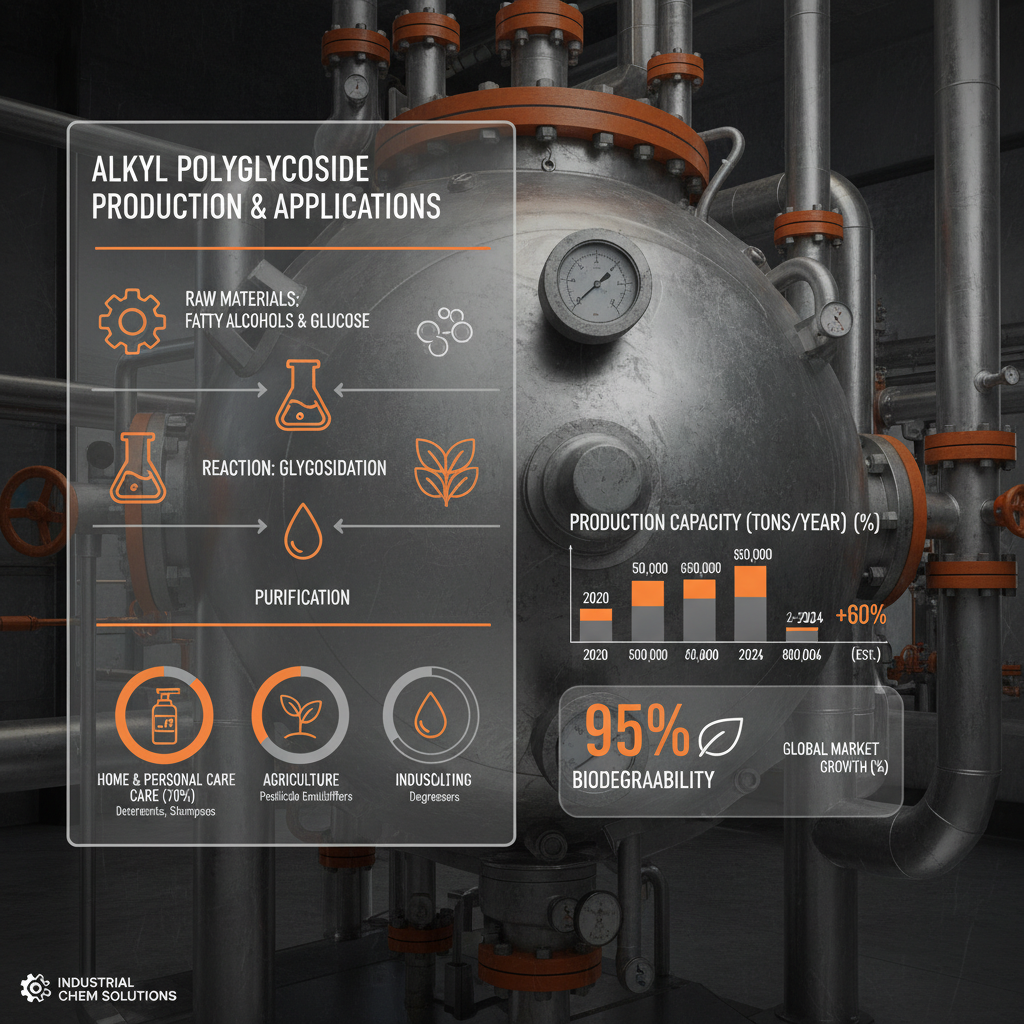
The production of Alkyl Polyglycoside involves a sophisticated chemical process where fatty alcohols, derived from renewable plant sources like coconut or palm kernel oil, are reacted with glucose obtained from starch. This reaction, typically catalyzed by an acid, creates a mixture of alkyl polyglucosides with varying degrees of polymerization (DP) – the number of glucose units attached to the alkyl chain. The DP influences the surfactant’s properties, like solubility and foamability.
The resulting product is a non-ionic surfactant, meaning it does not carry an electrical charge, contributing to its mildness and compatibility with other ingredients. The process is carefully controlled to ensure a consistent quality and purity of the final product. Modern manufacturing focuses on minimizing waste and optimizing resource utilization for maximum sustainability.
The selection of fatty alcohol chain length and glucose source influences the properties of the resulting Alkyl Polyglycoside. Different chain lengths cater to specific applications; shorter chains offer higher solubility, while longer chains enhance detergency. This customization ability is a key advantage of APG.
Key Characteristics of Alkyl Polyglycoside
One of the defining characteristics of Alkyl Polyglycoside is its exceptional biodegradability. Unlike many conventional surfactants, APG readily breaks down into harmless components in the environment, minimizing its long-term impact. This characteristic addresses growing concerns about aquatic pollution and the persistence of harmful chemicals.
APG also demonstrates excellent mildness, making it suitable for sensitive skin and delicate formulations. It's non-irritating and doesn't disrupt the skin's natural barrier, making it a popular choice in personal care products like shampoos, body washes, and facial cleansers. Its gentle nature also makes it safe for use in baby products.
Furthermore, Alkyl Polyglycoside offers impressive foaming and emulsification capabilities. It creates stable, rich foams and effectively blends oil and water, making it a versatile ingredient in cleaning products and cosmetic formulations. These properties are crucial for delivering the desired product performance and sensory experience.
Performance Metrics of Alkyl Polyglycoside Applications
Evaluating the performance of Alkyl Polyglycoside requires considering several key metrics depending on the application. In detergency, its ability to remove soil and stains is compared against benchmarks like Sodium Lauryl Sulfate (SLS) and Linear Alkylbenzene Sulfonate (LAS). Results often show comparable or even superior performance in specific scenarios, especially in hard water conditions.
Foam stability is another crucial metric, particularly for products like shampoos and dish soaps. APG demonstrates excellent foam volume and longevity, contributing to a satisfying user experience. Beyond performance, its environmental impact, measured by biodegradability and toxicity assessments, is a critical differentiating factor.
Alkyl Polyglycoside Performance Comparison
Global Applications and Market Sectors for Alkyl Polyglycoside
Alkyl Polyglycoside finds applications across a diverse range of industries. In the household cleaning sector, it’s a key ingredient in laundry detergents, dishwashing liquids, and all-purpose cleaners. Its gentle yet effective cleaning power makes it ideal for these applications.
The personal care industry utilizes APG in shampoos, body washes, facial cleansers, and hand soaps. Its mildness and biodegradability appeal to consumers seeking environmentally conscious and skin-friendly products. Furthermore, industrial applications include textile processing, agrochemicals, and even oilfield chemicals, leveraging its emulsifying and wetting properties.
The Advantages of Alkyl Polyglycoside: Sustainability and Value
The primary advantage of Alkyl Polyglycoside lies in its sustainability profile. Sourced from renewable resources and readily biodegradable, it offers a significantly reduced environmental impact compared to traditional, petroleum-based surfactants. This translates to a lower carbon footprint and minimizes the risk of pollution.
Beyond sustainability, APG offers cost-effectiveness due to its high performance and concentrated formulations. Its versatility allows for reduced ingredient complexity, streamlining manufacturing processes. From a branding perspective, the use of APG enhances product appeal among environmentally conscious consumers, strengthening brand reputation and loyalty.
Future Trends and Innovations in Alkyl Polyglycoside Technology
Ongoing research focuses on optimizing APG production processes to further enhance sustainability and reduce costs. Exploring alternative sugar sources and fatty alcohol feedstocks is a key area of innovation. Developments in enzymatic synthesis offer potential for more efficient and environmentally friendly production methods.
The demand for high-performance, specialized APG formulations is driving innovation in tailoring the alkyl chain length and degree of polymerization to specific applications. Integration with other bio-based ingredients and the development of synergistic formulations are also gaining traction. The increasing emphasis on circular economy principles further fuels the demand for sustainable surfactants like APG.
Digitalization and AI are playing a role in optimizing APG manufacturing, predicting performance characteristics, and accelerating the development of new formulations. This data-driven approach allows for more targeted innovation and efficient resource utilization.
Challenges and Solutions in Alkyl Polyglycoside Implementation
Despite its benefits, the widespread adoption of Alkyl Polyglycoside faces challenges, including the sourcing of sustainable and ethically produced raw materials. Palm oil, a common feedstock, has faced criticism regarding deforestation and social impacts. Ensuring responsible sourcing through certifications like RSPO is crucial.
Another challenge is the relatively higher cost compared to some conventional surfactants. However, this cost differential is decreasing as production scales up and process efficiencies improve. Innovation in alternative feedstock options, like algae-based oils, can further mitigate cost concerns.
Addressing consumer perception and raising awareness about the benefits of Alkyl Polyglycoside are also important. Clear labeling and communication about its sustainability and performance characteristics can build trust and drive adoption.
Analysis of Key Factors Influencing Alkyl Polyglycoside Adoption
| Factor |
Impact Level (1-10) |
Current Status |
Future Outlook |
| Raw Material Sourcing |
8 |
Moderate – Certification initiatives gaining traction |
High – Increased focus on traceability and sustainable feedstocks |
| Production Cost |
7 |
Relatively high compared to conventional surfactants |
Medium – Expected to decrease with increased scale and process optimization |
| Regulatory Pressure |
9 |
Increasingly stringent regulations on surfactant biodegradability |
High – Further tightening of regulations anticipated |
| Consumer Awareness |
6 |
Growing, but still limited understanding of APG benefits |
Medium – Increased marketing and education efforts expected |
| Formulation Compatibility |
7 |
Generally excellent, but requires careful formulation adjustments |
High – Further research on synergistic formulations |
| Performance Consistency |
8 |
Consistent performance across various applications |
High – Continued optimization of production processes |
FAQS
Alkyl Polyglycoside stands out as a sustainable surfactant due to its derivation from renewable resources – vegetable oils and sugars. Unlike traditional surfactants made from petrochemicals, APG is readily biodegradable, breaking down into harmless components in the environment. This significantly reduces its environmental impact, lowering its carbon footprint and minimizing pollution of waterways. Its production also requires less energy and water compared to conventional alternatives, contributing to its overall sustainability.
Yes, Alkyl Polyglycoside is renowned for its exceptional mildness, making it a preferred ingredient in formulations designed for sensitive skin and baby products. It’s non-irritating and doesn't disrupt the skin's natural lipid barrier, minimizing the risk of dryness or allergic reactions. Its gentle properties make it suitable for daily use without causing discomfort or irritation, ensuring a safe and comfortable experience for even the most delicate skin types.
Compared to Sodium Lauryl Sulfate (SLS), Alkyl Polyglycoside offers several key advantages. SLS can be harsh and irritating, stripping the skin of its natural oils. APG, on the other hand, is much milder and less likely to cause irritation. While SLS is a highly effective cleanser, APG provides comparable cleaning power with a significantly better safety profile and environmental footprint. Furthermore, APG is readily biodegradable, unlike SLS.
Alkyl Polyglycoside is a versatile ingredient used across a broad range of cleaning applications. It is commonly found in laundry detergents, dishwashing liquids, all-purpose cleaners, and hard surface cleaners. Its excellent foaming, emulsifying, and detergency properties make it effective in removing dirt, grease, and stains. Due to its mildness and biodegradability, it’s also increasingly used in eco-friendly and plant-based cleaning product formulations.
Alkyl Polyglycoside has a positive impact on the environment due to its biodegradability and renewable sourcing. It breaks down rapidly into harmless substances, minimizing its persistence in the environment and reducing pollution. Being derived from plant-based resources, it reduces reliance on fossil fuels and contributes to a lower carbon footprint. It is also less toxic to aquatic life compared to many conventional surfactants, promoting a healthier ecosystem.
You can find information about the sustainability certifications of Alkyl Polyglycoside suppliers through organizations like the Roundtable on Sustainable Palm Oil (RSPO) if palm oil is used. Look for suppliers who are certified by these organizations, demonstrating a commitment to responsible sourcing. Websites such as Ecocert and Cosmos also provide information on certified sustainable ingredients. Checking supplier websites for detailed sustainability reports is also recommended.
Conclusion
In conclusion, Alkyl Polyglycoside represents a significant advancement in surfactant technology, offering a sustainable, high-performing, and versatile alternative to traditional options. Its biodegradability, mildness, and effectiveness across diverse applications make it a compelling choice for industries and consumers alike. The growing demand for eco-friendly products and stricter environmental regulations are driving its widespread adoption.
Looking ahead, continued innovation in sourcing, production, and formulation will further enhance the benefits of Alkyl Polyglycoside. Its role in creating a more sustainable future for the chemical industry is undeniable. To learn more about how Alkyl Polyglycoside can benefit your products and contribute to a greener world, visit our website today.