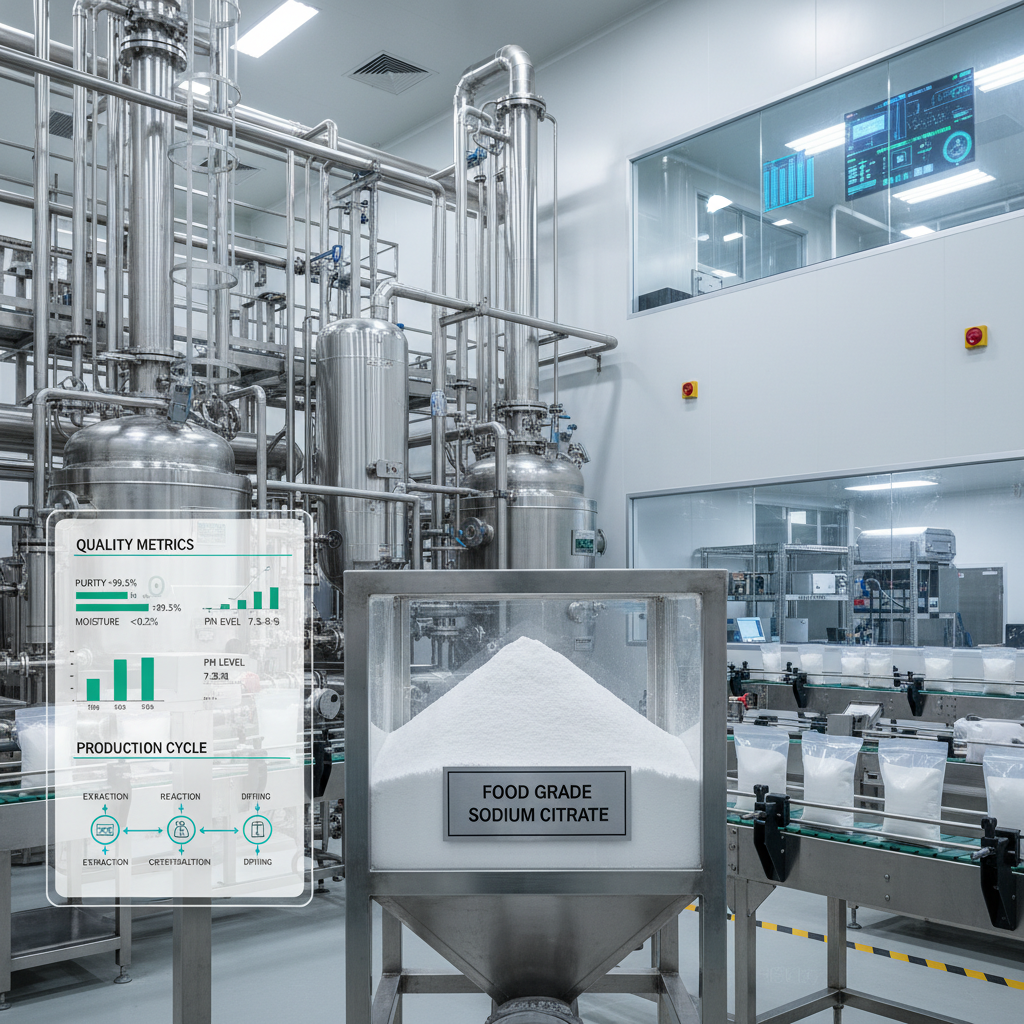
Food Grade Sodium Citrate serves as a critical additive in the global food and beverage industry, prized for its versatile ability to regulate acidity and enhance flavor stability. As consumer demand for clean-label ingredients and consistent product quality rises, understanding the chemical properties and regulatory standards of this salt becomes essential for manufacturers aiming to optimize their formulations.
Across international markets, the application of this compound extends from the emulsification of processed cheeses to the stabilization of carbonated drinks, ensuring that products remain shelf-stable and palatable. Its role as a buffering agent allows producers to maintain a precise pH level, which is not only vital for taste but also critical for inhibiting the growth of spoilage microorganisms.
By integrating high-purity Food Grade Sodium Citrate into production lines, companies can achieve a superior balance between technical performance and safety. This guide explores the industrial context, technical advantages, and future trajectories of this essential chemical, providing a comprehensive roadmap for procurement and application specialists.
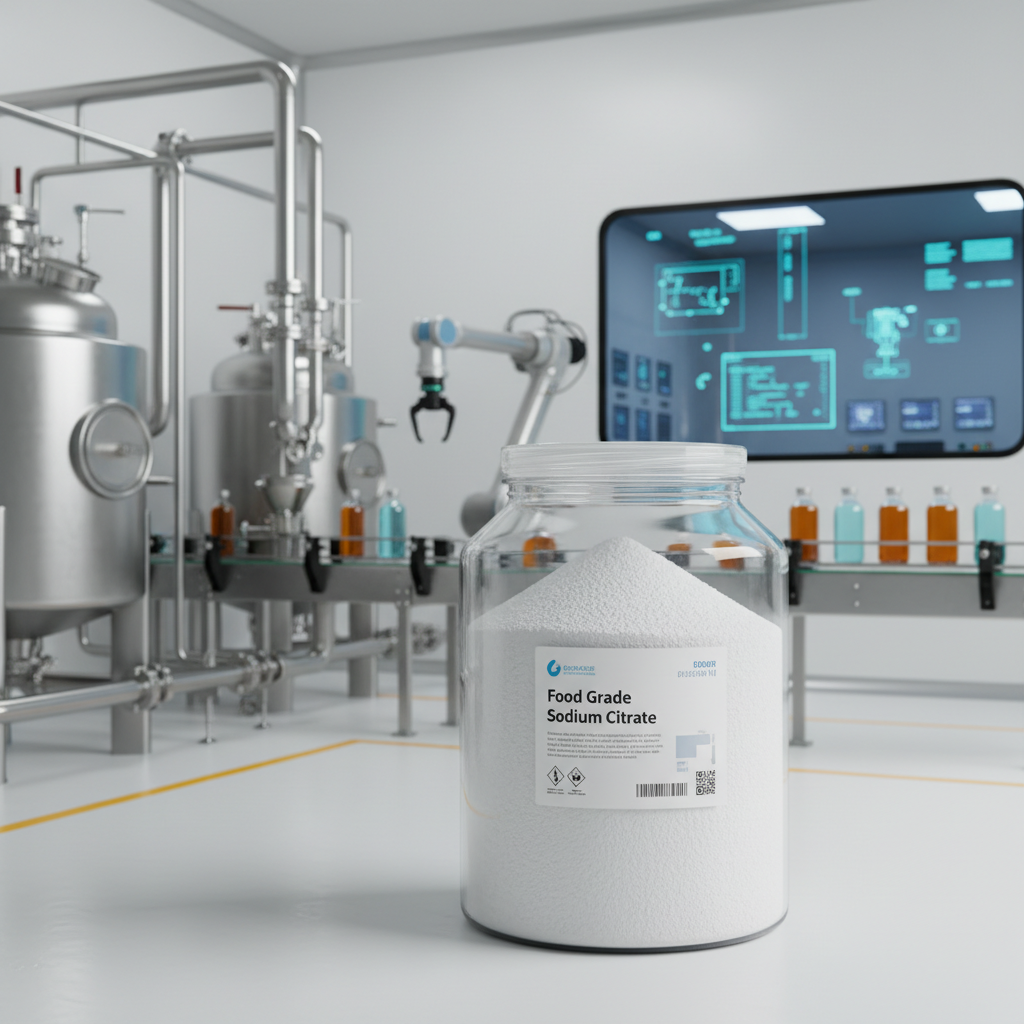
Global Industry Context of Food Grade Sodium Citrate
The global market for Food Grade Sodium Citrate has witnessed steady growth, driven by the expansion of the processed food sector in Asia-Pacific and Latin America. According to industry standards aligned with ISO and FCC (Food Chemicals Codex), the demand is fueled by the need for high-efficiency emulsifiers that can withstand rigorous industrial processing while remaining safe for human consumption.
However, the industry faces a persistent challenge: the volatility of raw material costs and the stringent requirement for purity levels that exceed 99%. Manufacturers must navigate a complex landscape of international trade regulations and health certifications to ensure that their supply chain remains uninterrupted and compliant with global safety benchmarks.
Definition and Chemical Significance
In simple terms, Food Grade Sodium Citrate is the sodium salt of citric acid. It acts as a powerful buffering agent, meaning it can resist changes in pH when small amounts of acid or base are added to a system. This chemical stability is what makes it indispensable for maintaining the flavor profile and structural integrity of a wide array of food products.
Beyond its basic chemistry, its significance lies in its ability to sequester metal ions. By binding to minerals like calcium and magnesium, it prevents these ions from reacting with other ingredients, which would otherwise lead to precipitation or discoloration. This "chelating" property is essential for maintaining the clarity of beverages and the smoothness of dairy products.
From a humanitarian and industrial perspective, the production of high-quality sodium citrate supports food security by extending the shelf life of essential nutrients. By preventing premature degradation of food products, it reduces waste in the global supply chain, aligning industrial chemical production with broader goals of sustainability and resource efficiency.
Core Technical Components and Factors
One of the primary factors determining the quality of Food Grade Sodium Citrate is its purity level. Impurities, such as heavy metals or residual reactants, can alter the taste of the final product or lead to regulatory non-compliance. Therefore, advanced crystallization and filtration processes are employed to ensure the product meets the strictest pharmaceutical and food-grade specifications.
pH Buffering Capacity is another critical component. The ability of Food Grade Sodium Citrate to stabilize acidity is what allows it to be used in everything from vegan cheese alternatives to professional confectionery. By keeping the pH within a narrow range, it prevents protein coagulation and ensures a consistent mouthfeel.
Finally, Solubility and Particle Size play a huge role in practical application. For liquid formulations, a rapid dissolution rate is required to avoid clumping. In powder-based mixes, a controlled particle size ensures that the Food Grade Sodium Citrate blends uniformly with other dry ingredients, preventing "hot spots" of acidity or salinity in the final product.
Global Applications and Real-World Use Cases
The versatility of Food Grade Sodium Citrate makes it a staple in diverse industrial zones. In the European dairy industry, it is the "secret ingredient" for processed cheese slices, acting as an emulsifying salt that prevents the fat from separating from the protein during the heating process, resulting in a smooth, meltable texture.
In North American beverage plants, it is extensively used to balance the tartness of citric acid in soft drinks and sports beverages. Beyond the food sector, it finds use in specialized pharmaceutical syrups where it acts as a stabilizer to ensure that active ingredients remain suspended and effective over long periods of storage.
Performance Analysis of Sodium Citrate Variants
Long-Term Value and Safety Advantages
The primary long-term value of utilizing Food Grade Sodium Citrate lies in its unmatched safety profile. Recognized as GRAS (Generally Recognized as Safe) by the FDA, it provides manufacturers with peace of mind, knowing that the additive is metabolized naturally by the body. This trust is the foundation of consumer loyalty in an era where ingredient transparency is non-negotiable.
From an economic standpoint, its efficiency reduces the need for excessive amounts of other, more expensive stabilizers. By optimizing the chemical environment of a food product, it reduces spoilage rates and increases the reliability of the production cycle, ultimately lowering the cost of waste and enhancing the overall sustainability of the manufacturing process.
Future Trends and Sustainable Innovations
Looking ahead, the production of Food Grade Sodium Citrate is shifting toward "Green Chemistry." The industry is moving away from traditional synthesis toward bio-fermentation using non-GMO substrates. This shift not only reduces the carbon footprint of production but also appeals to the growing demographic of eco-conscious consumers who demand plant-based and sustainably sourced ingredients.
Digital transformation is also playing a role through the implementation of AI-driven quality control. Real-time sensors can now monitor the crystallization process of Food Grade Sodium Citrate, ensuring that every batch meets an identical specification of purity and particle size, virtually eliminating human error in the production line.
Furthermore, the rise of precision nutrition is leading to the development of customized citrate blends. These innovations allow for the creation of functional foods that provide specific pH-regulated delivery of vitamins and minerals, positioning Food Grade Sodium Citrate as a key component in the next generation of health-focused food science.
Challenges and Expert Solutions in Production
Despite its benefits, the industry struggles with "clumping" or caking during storage and transport. This occurs when moisture penetrates the crystalline structure of Food Grade Sodium Citrate, leading to hard lumps that are difficult to dissolve. Expert solutions include the use of advanced anti-caking agents or the adoption of vacuum-sealed, moisture-proof packaging.
Another challenge is the balance between cost and purity. Many low-cost suppliers offer products that meet basic standards but fail in high-precision applications. The solution lies in implementing a rigorous vendor qualification process, utilizing HPLC (High-Performance Liquid Chromatography) to verify the actual purity levels rather than relying solely on a certificate of analysis.
Finally, managing the environmental impact of effluent water during the synthesis of Food Grade Sodium Citrate is a priority. Leading firms are adopting closed-loop water recycling systems that recapture unreacted citric acid and sodium bases, significantly reducing the chemical load on local wastewater treatment plants.
Comparative Analysis of Food Grade Sodium Citrate Quality Metrics
| Product Grade |
Purity Level (%) |
Solubility Rate |
Stability Score (1-10) |
| Standard Food Grade |
99.0% |
High |
7 |
| Premium FCC Grade |
99.5% |
Very High |
9 |
| Industrial Grade |
98.0% |
Medium |
5 |
| Pharma-Pure Grade |
99.9% |
Instant |
10 |
| Organic-Certified |
99.2% |
High |
8 |
| Coarse Granular |
99.0% |
Slow |
6 |
FAQS
The primary difference lies in purity and the strictness of the manufacturing process. Food Grade Sodium Citrate is produced under GMP (Good Manufacturing Practices) and must meet FCC or USP standards, ensuring it is free from harmful contaminants and heavy metals. Industrial grade lacks these certifications and is intended for non-consumable applications like detergent manufacturing or water treatment.
In cheese production, it acts by replacing the calcium ions that hold casein proteins together. By sequestering these ions, it allows the proteins to disperse more evenly and bind with fats, creating a smooth, homogenous emulsion that melts uniformly without separating into oil and solids.
Yes, it is widely recognized as safe (GRAS) by global health authorities including the FDA and EFSA. Since it is a salt of citric acid—a naturally occurring compound in citrus fruits—the body processes it efficiently. However, as with any sodium-based salt, individuals on strict low-sodium diets should monitor their intake.
To maintain the free-flowing nature of the powder, store it in a cool, dry environment with low humidity. Use airtight containers, preferably HDPE plastic or lined drums, and ensure that the product is kept away from direct sunlight and moisture-heavy areas to prevent hydration and subsequent caking.
Absolutely. In fact, it is essential for vegan cheese alternatives. Since vegan "cheeses" lack animal-based proteins, sodium citrate helps simulate the melting and stretching properties of traditional dairy by stabilizing the vegetable fats and starches used in the formulation.
Low-purity samples often exhibit a slight off-white or yellowish tint instead of a bright white color. They may also have a distinct chemical odor or cause unpredictable pH swings during formulation. In some cases, poor purity leads to "grittiness" in the final food product due to undissolved impurities.
Conclusion
In summary, Food Grade Sodium Citrate is far more than a simple additive; it is a foundational tool for quality control in the modern food industry. From its role as a pH buffer and emulsifier to its ability to sequester minerals and enhance shelf stability, it ensures that global food products are safe, consistent, and palatable. By prioritizing purity, understanding the technical nuances of solubility, and adhering to international safety standards, manufacturers can unlock the full potential of this versatile compound.
As the industry evolves toward green chemistry and AI-driven precision, the significance of sourcing high-quality, sustainably produced Food Grade Sodium Citrate will only increase. We recommend that procurement officers and food scientists collaborate closely with certified suppliers to ensure their formulations remain competitive and compliant. For those seeking premium-grade chemical solutions tailored to industrial needs, we invite you to visit our website: www.zjsles.com.