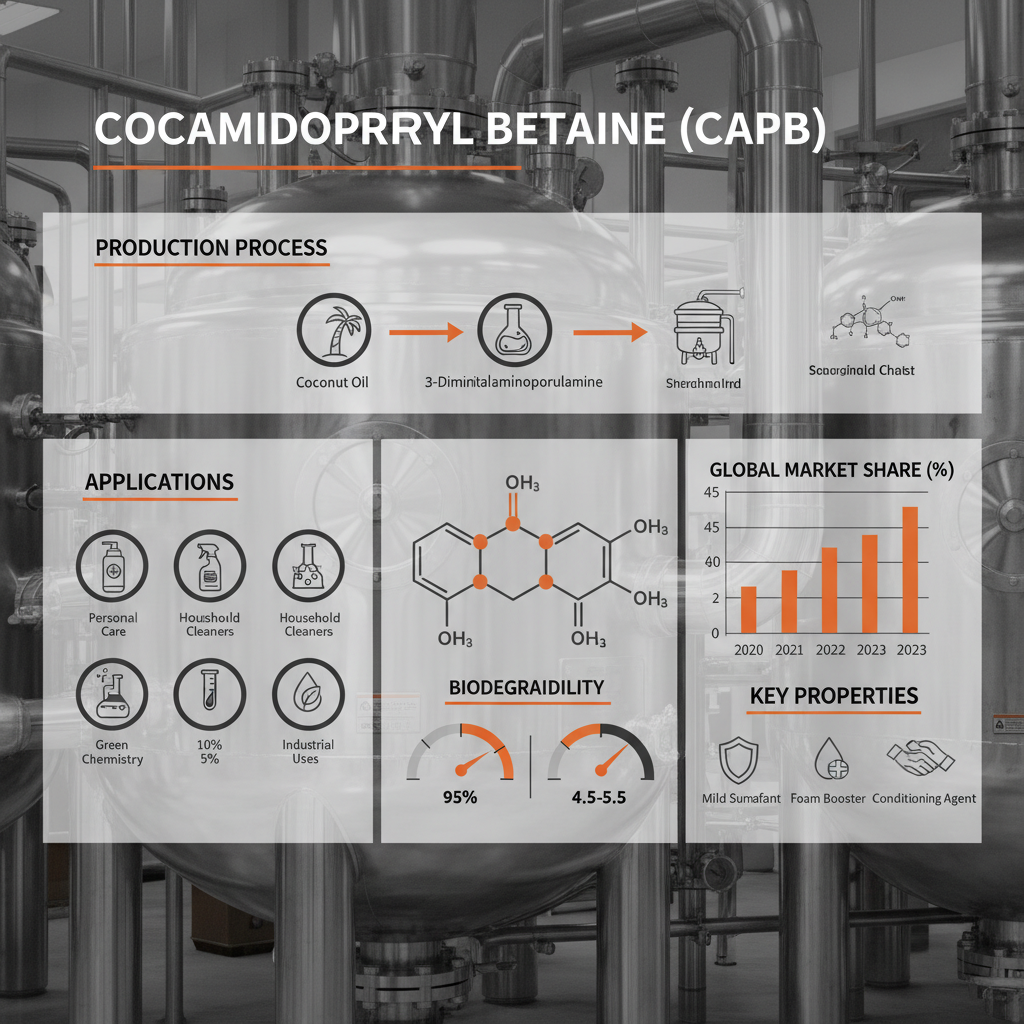
Cocamidopropyl Betaine is a remarkably versatile amphoteric surfactant widely utilized in personal care and cleaning products. Its mildness and excellent foaming properties make it a cornerstone ingredient in formulations ranging from shampoos and body washes to liquid hand soaps and facial cleansers. Globally, the demand for gentler, more sustainable surfactants has driven significant growth in the Cocamidopropyl Betaine market, positioning it as a key component in meeting evolving consumer preferences.
The increasing focus on environmentally friendly and biodegradable ingredients further elevates the importance of Cocamidopropyl Betaine. Derived from coconut oil, it presents a renewable and readily available resource, aligning with the global push for sustainable chemistry. This contrasts sharply with many traditional surfactants that rely on petrochemical feedstocks.
Understanding Cocamidopropyl Betaine – its properties, applications, and production – is crucial for formulators, manufacturers, and consumers alike. As the demand for milder, eco-conscious products continues to rise, the role of this versatile surfactant will only become more prominent in shaping the future of the personal care and cleaning industries.

The Core Properties of Cocamidopropyl Betaine
Cocamidopropyl Betaine's unique amphoteric nature allows it to function effectively as both a cationic and anionic surfactant, depending on the pH of the formulation. This versatility is a key driver of its broad applicability. Its exceptional mildness minimizes irritation, making it ideal for sensitive skin and baby products.
Beyond its mildness, Cocamidopropyl Betaine exhibits excellent foaming and viscosity-building properties. It enhances the lather quality and provides a pleasant texture to formulations. These properties are often leveraged in synergy with other surfactants to achieve desired performance characteristics in a wide range of applications, including Cocamidopropyl Betaine based shampoos.
Global Market Dynamics of Cocamidopropyl Betaine
The global market for Cocamidopropyl Betaine has experienced robust growth in recent years, fueled by increasing demand for milder and more sustainable surfactants. Asia-Pacific currently dominates the market, driven by a large consumer base and expanding personal care industries in countries like China and India. North America and Europe represent significant markets, with a strong emphasis on natural and organic formulations.
According to market research reports, the Cocamidopropyl Betaine market is projected to continue its upward trajectory, with a compound annual growth rate (CAGR) of around 5-7% over the next five years. This growth is spurred by rising disposable incomes, evolving consumer preferences, and stricter regulations regarding the use of harsh chemicals in personal care and cleaning products.
Supply chain disruptions and fluctuations in the price of coconut oil, the primary raw material, can influence market dynamics. However, ongoing innovation in production processes and the development of alternative sourcing strategies are helping to mitigate these challenges.
Chemical Composition and Manufacturing of Cocamidopropyl Betaine
Cocamidopropyl Betaine is derived from the reaction of coconut oil-based amidopropyl betaine with sodium monochloroacetate. This process yields a mixture of betaines, primarily cocamidopropyl dimethyl betaine and cocamidopropyl hydroxypropyl betaine. The resulting product is a clear, viscous liquid with a characteristic mild odor.
The manufacturing process typically involves several stages, including amidopropyl betaine production, quaternization with sodium monochloroacetate, and purification. Stringent quality control measures are implemented throughout the process to ensure product purity, consistency, and compliance with industry standards. The quality of the starting coconut oil directly impacts the final product’s characteristics and performance.
Modern manufacturing facilities employ advanced technologies to optimize efficiency, minimize waste, and reduce environmental impact. These include closed-loop systems for solvent recovery and wastewater treatment, contributing to a more sustainable production process.
Performance Characteristics of Cocamidopropyl Betaine
Cocamidopropyl Betaine demonstrates excellent compatibility with a wide range of anionic, cationic, and nonionic surfactants. This versatility allows formulators to create complex formulations with tailored properties. It also exhibits good hard water tolerance, maintaining its foaming and cleansing performance even in challenging water conditions.
Comparative Performance of Cocamidopropyl Betaine in Different Formulations
Applications Across Diverse Industries
Cocamidopropyl Betaine finds extensive application in the personal care industry, serving as a key ingredient in shampoos, body washes, liquid hand soaps, and facial cleansers. Its mildness and foaming properties make it particularly suitable for sensitive skin formulations and baby products. In household cleaning products, it's used in dish soaps, laundry detergents, and surface cleaners to provide effective cleaning and foaming.
Beyond these core applications, Cocamidopropyl Betaine is also utilized in industrial cleaning, textile processing, and even agricultural formulations. Its versatility and compatibility with other ingredients make it a valuable component in a wide range of products. As an example, specialized formulations for oilfield applications leverage its surfactant properties to enhance oil recovery.
Sustainability and Environmental Impact
Derived from coconut oil, a renewable resource, Cocamidopropyl Betaine presents a more sustainable alternative to traditional petrochemical-based surfactants. Coconut plantations, when managed responsibly, can contribute to carbon sequestration and biodiversity conservation. Cocamidopropyl Betaine manufacturers are increasingly focusing on sustainable sourcing practices.
Cocamidopropyl Betaine is readily biodegradable, minimizing its persistence in the environment. However, it's crucial to ensure proper wastewater treatment to prevent potential ecological impacts. Ongoing research is exploring further optimization of production processes to reduce energy consumption and minimize waste generation.
The growing demand for eco-friendly products is driving innovation in the development of even more sustainable alternatives and production methods for Cocamidopropyl Betaine.
Future Trends and Regulatory Landscape
The future of Cocamidopropyl Betaine is likely to be shaped by several key trends, including the growing demand for natural and organic ingredients, the increasing focus on sustainability, and the evolving regulatory landscape. Innovation in production technologies will drive efficiency and reduce environmental impact.
Regulatory bodies worldwide are scrutinizing the safety and environmental impact of surfactants, leading to stricter standards and increased transparency. Manufacturers are proactively adapting to these changes by investing in research and development and adopting sustainable practices. The rise of "green chemistry" principles will further accelerate the development of eco-friendly surfactant alternatives.
Furthermore, advancements in biotechnology may lead to the production of Cocamidopropyl Betaine from alternative, non-coconut sources, reducing reliance on a single raw material and enhancing supply chain resilience.
Overview of Cocamidopropyl Betaine’s Key Performance Indicators
| Application Area |
Mildness Score (1-10) |
Foaming Volume (mL) |
Biodegradability Rating (1-5) |
| Baby Shampoo |
9.5 |
150 |
4.5 |
| Sensitive Skin Body Wash |
9 |
180 |
4 |
| Dish Soap |
6 |
220 |
3.5 |
| Hand Soap |
7.5 |
200 |
4 |
| Facial Cleanser |
8.5 |
160 |
4.2 |
| Laundry Detergent |
6.5 |
250 |
3 |
FAQS
Cocamidopropyl Betaine is a mild, amphoteric surfactant derived from coconut oil. It's widely used in personal care and cleaning products like shampoos, body washes, and hand soaps due to its excellent foaming, thickening, and conditioning properties. It’s valued for its gentleness on the skin and compatibility with other surfactants, making it a versatile ingredient in various formulations.
Yes, Cocamidopropyl Betaine is generally considered safe for sensitive skin. Its mild nature and low irritation potential make it a popular choice for formulations designed for individuals with sensitive skin or conditions like eczema. However, as with any ingredient, some individuals may experience allergic reactions, so patch testing is always recommended.
Cocamidopropyl Betaine is more environmentally friendly than many traditional surfactants as it’s derived from renewable coconut oil and is readily biodegradable. This means it breaks down more easily in the environment, minimizing its long-term impact. However, responsible sourcing of coconut oil and proper wastewater treatment are crucial to ensure its sustainability.
While generally mild, Cocamidopropyl Betaine can sometimes contain trace amounts of dimethylaminopropylamine (DMAPA), a potential allergen. Manufacturers are working to minimize DMAPA levels in their products. If you have a known allergy to DMAPA, it’s essential to check product labels or consult with a dermatologist.
Compared to Sodium Lauryl Sulfate (SLS) and Sodium Laureth Sulfate (SLES), Cocamidopropyl Betaine is significantly milder and less irritating. SLS and SLES are known for their strong cleansing power but can strip the skin of its natural oils. Cocamidopropyl Betaine provides effective cleansing with a much gentler effect, making it preferable for sensitive skin and everyday use.
High-quality Cocamidopropyl Betaine can be sourced from reputable chemical suppliers and manufacturers specializing in surfactants. When selecting a supplier, look for certifications ensuring product purity, consistency, and compliance with industry standards. ZJSLES is a trusted source for high quality Cocamidopropyl Betaine and other surfactants.
Conclusion
Cocamidopropyl Betaine stands out as a highly versatile and valuable surfactant, offering a unique combination of mildness, foaming performance, and sustainability. Its widespread application across personal care, cleaning products, and industrial processes underscores its importance in meeting evolving consumer demands and environmental concerns. Understanding its properties and applications is essential for formulators, manufacturers, and anyone seeking effective and gentle cleansing solutions.
Looking ahead, continued innovation in production techniques, coupled with a growing emphasis on sustainable sourcing, will further enhance the appeal of Cocamidopropyl Betaine. Its role in formulating eco-friendly and consumer-friendly products will only become more prominent, shaping the future of the surfactant industry. Visit our website at www.zjsles.com to learn more about our range of high-quality surfactants.