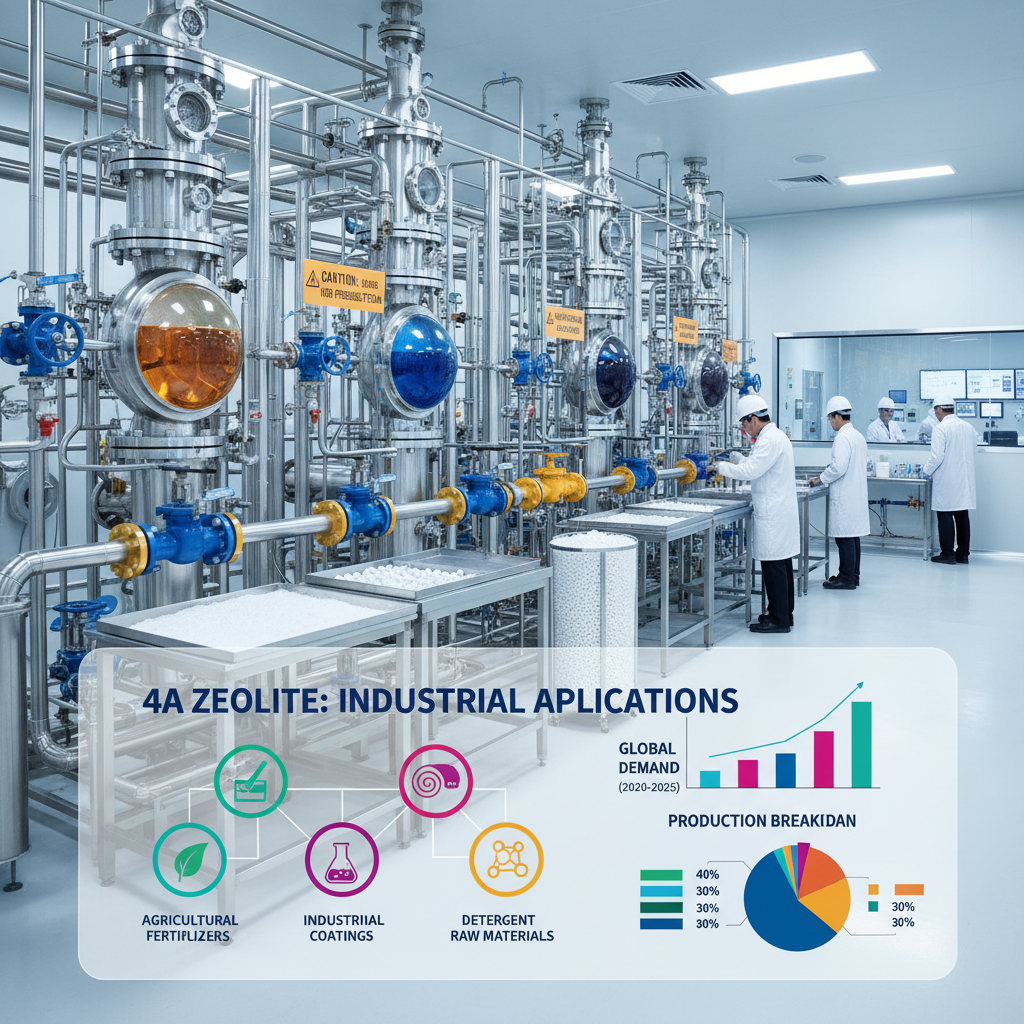
In the sophisticated landscape of industrial chemistry, 4A Zeolite stands as a cornerstone material, renowned for its exceptional molecular sieving capabilities and ion-exchange properties. As a crystalline aluminosilicate, it plays a pivotal role in everything from environmental remediation to the optimization of household cleaning agents, making it an indispensable asset in the global specialty chemicals market.
Understanding the mechanics of 4A Zeolite is not merely a technical exercise but a commercial necessity for manufacturers aiming to improve product purity and efficiency. Its unique pore structure allows it to selectively adsorb molecules based on size and polarity, providing a precise solution for dehydration and purification challenges across multiple industrial sectors.
Globally, the demand for high-performance adsorbents is surging as industries shift toward sustainable and energy-efficient processes. By integrating 4A Zeolite into their production lines, companies can significantly reduce waste, lower energy consumption during distillation, and enhance the overall quality of their chemical outputs.
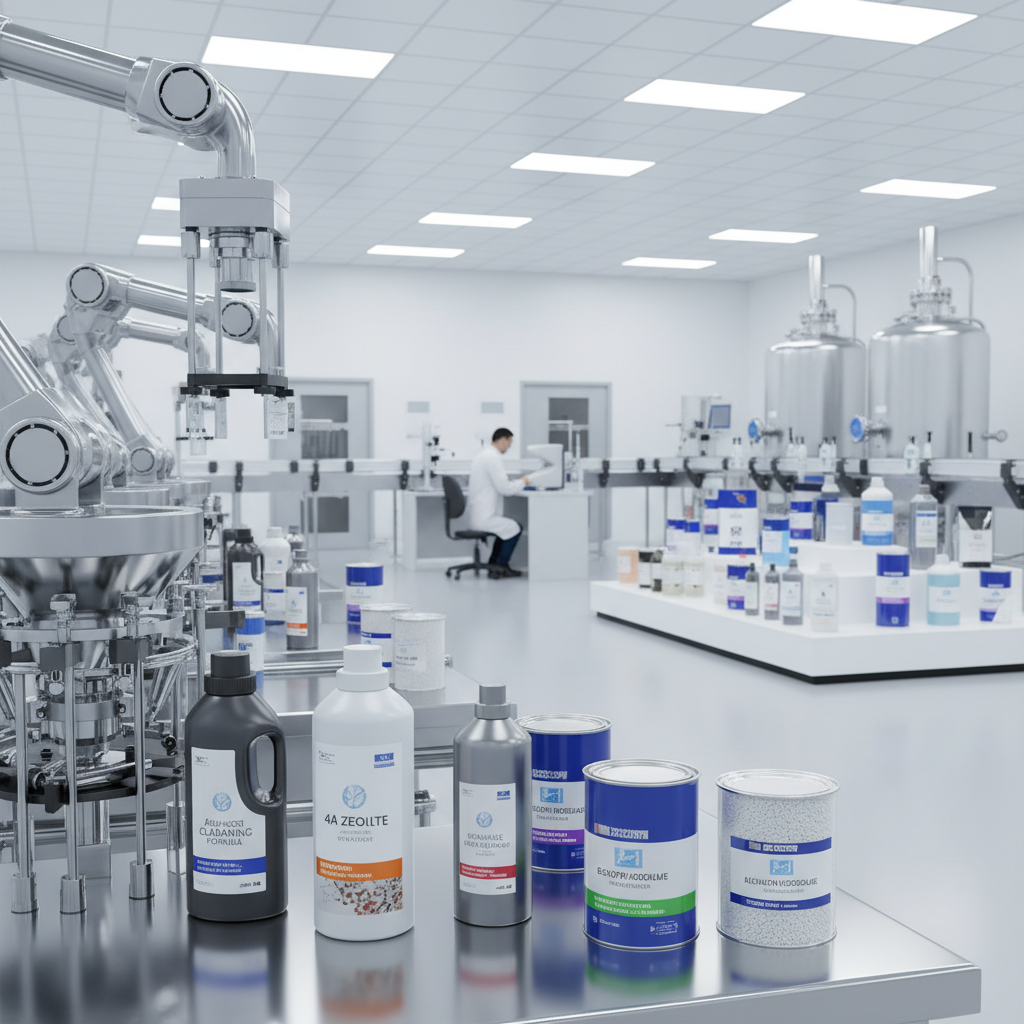
Global Industrial Context of 4A Zeolite
The global adoption of 4A Zeolite is deeply intertwined with the evolution of the detergent and petrochemical industries. According to industry standards and ISO certifications for chemical materials, the shift away from phosphates in detergents—due to environmental concerns like eutrophication—has catapulted zeolites into the spotlight. They serve as the primary "builder," replacing phosphates to soften water by exchanging sodium ions for calcium and magnesium ions.
Beyond consumer goods, the petrochemical sector relies heavily on these molecular sieves to ensure the purity of natural gas and ethanol. In an era where energy efficiency is mandated by global climate goals, the ability of 4A Zeolite to remove water from organic solvents without the need for energy-intensive distillation is a game-changer for operational costs and carbon footprints.
Definition and Chemical Mechanism of 4A Zeolite
At its most fundamental level, 4A Zeolite is a synthetic crystalline aluminosilicate with a highly regular three-dimensional framework. The "4A" designation refers to the approximate diameter of its pores—roughly 4 Angstroms—which acts as a precise biological or chemical "gatekeeper," allowing only molecules smaller than this threshold to enter the internal cage structure.
This structural precision is what makes the material so effective for selective adsorption. For instance, water molecules, which have a kinetic diameter smaller than 4A, are easily trapped within the zeolite lattice, while larger hydrocarbons are excluded. This makes the material an ideal desiccant for industrial gases and liquid fuels where moisture must be eliminated to prevent corrosion or unwanted side reactions.
Furthermore, the presence of alkali metal cations (typically sodium) within the framework grants 4A Zeolite its ion-exchange capabilities. By swapping these sodium ions for divalent ions like Ca²⁺ and Mg²⁺, the material effectively softens hard water, a process critical for the performance of surfactants in detergents and the longevity of industrial boilers.
Core Components and Technical Factors
The performance of 4A Zeolite is primarily governed by its crystalline purity and pore volume. High-quality synthesis ensures a uniform distribution of pore sizes, preventing "leakage" where larger, unwanted molecules might enter the structure, thereby compromising the purity of the final processed product.
Thermal stability is another critical factor for 4A Zeolite. Because these materials are often regenerated using heat (thermal desorption), the ability of the aluminosilicate framework to withstand repeated heating and cooling cycles without collapsing is essential for maintaining long-term cost efficiency and operational reliability.
Lastly, the cation-to-silica ratio determines the electrostatic field within the pores. In 4A Zeolite, this ratio is optimized to maximize the affinity for polar molecules like water, ensuring rapid adsorption kinetics even at low concentrations of moisture in a gas stream.
Global Applications and Use Cases
In the realm of detergent and surfactants, 4A Zeolite is widely used across Europe and North America to comply with strict phosphate-free regulations. By removing hardness ions from wash water, it prevents the precipitation of soap scum, allowing surfactants to work more effectively at lower temperatures, which in turn saves energy for millions of households.
Beyond the home, in remote industrial zones or oil refineries, these molecular sieves are deployed in massive pressure swing adsorption (PSA) units. Here, 4A Zeolite is used to dry natural gas pipelines, preventing the formation of hydrates (ice-like crystals) that could otherwise block pipes and cause catastrophic system failures in sub-zero environments.
Performance Efficiency of 4A Zeolite Variations
Advantages and Long-Term Value
The primary value of 4A Zeolite lies in its sustainability and reliability. Unlike liquid chemical desiccants, zeolites are solid-state materials that can be regenerated and reused hundreds of times. This creates a circular economy within the plant, drastically reducing the volume of chemical waste and lowering the long-term procurement costs for the manufacturer.
From a social and safety perspective, replacing hazardous chemicals with 4A Zeolite enhances workplace safety. Being chemically inert and non-toxic, it eliminates the risk of corrosive leaks or toxic fumes, providing a safer environment for operators and reducing the liability risks associated with hazardous material handling.
Future Trends and Material Innovations
The future of 4A Zeolite is moving toward "nano-zeolites." By reducing particle size to the nanometer scale, researchers are increasing the available surface area, which significantly accelerates the rate of adsorption. This innovation is expected to lead to smaller, more compact drying units in the automotive and aerospace industries, where space and weight are at a premium.
Additionally, the integration of "green chemistry" in the synthesis of 4A Zeolite is gaining momentum. By utilizing waste materials from the agricultural or forestry industry (such as rice husk ash) as silica sources, manufacturers can produce zeolites with a much lower carbon footprint, aligning with the global drive toward net-zero emissions.
Digital transformation is also touching the zeolite sector. The use of AI-driven molecular modeling allows chemists to predict how 4A Zeolite will interact with specific complex mixtures, enabling the "custom-tuning" of pore properties for highly specialized pharmaceutical or electronic-grade chemical purifications.
Challenges and Strategic Solutions
Despite its advantages, 4A Zeolite can be susceptible to "fouling," where larger organic molecules or oils block the pore openings, rendering the material inactive. This is a common challenge in industrial gas streams containing heavy hydrocarbons, which can lead to premature degradation of the molecular sieve bed.
To overcome this, experts suggest implementing a "guard bed" strategy. By placing a layer of activated alumina or a larger-pore zeolite before the 4A Zeolite layer, larger contaminants are captured first, protecting the precise 4A pores and extending the lifespan of the primary adsorbent by up to 40%.
Another challenge is the energy cost associated with thermal regeneration. Innovative solutions now include microwave-assisted regeneration, which targets the water molecules trapped inside the 4A Zeolite framework directly. This method is significantly faster and more energy-efficient than traditional oven heating, reducing downtime and operational overhead.
Analysis of 4A Zeolite Performance Across Different Industrial Scenarios
| Industry Sector |
Primary Function |
Efficiency Score (1-10) |
Replacement Cycle |
| Detergents |
Water Softening |
9.5 |
Single Use |
| Natural Gas |
Dehydration |
9.8 |
2-3 Years |
| Bio-Ethanol |
Water Removal |
9.2 |
1-2 Years |
| Painting/Coating |
Solvent Drying |
8.7 |
6-12 Months |
| Medical Oxygen |
N2 Separation |
8.9 |
3-5 Years |
| Waste Water |
Heavy Metal Removal |
8.1 |
Variable |
FAQS
4A Zeolite is specifically optimized for water adsorption due to its 4 Angstrom pore size, which perfectly matches the kinetic diameter of water molecules while excluding larger organic molecules. This makes it more selective and efficient for dehydration tasks compared to 3A or 5A zeolites in many common industrial applications.
Depending on the purity of the feed gas and the frequency of regeneration, 4A Zeolite can typically last between 2 to 5 years. The lifespan is significantly extended if "guard beds" are used to remove heavy hydrocarbons and oils that would otherwise foul the pores.
Yes, it is highly eco-friendly. It was developed as a biodegradable and non-toxic replacement for sodium tripolyphosphate (STPP), which caused algae blooms and water pollution. Zeolites are inert minerals that do not disrupt aquatic ecosystems.
While the principle of heating to remove moisture is simple, industrial-grade 4A Zeolite requires high, consistent temperatures (often 200-300°C) to be fully reactivated. Most commercial users rely on industrial vacuum ovens or PSA systems to ensure complete regeneration.
Powdered zeolite is ideal for detergent formulations where it must be mixed into a powder. Pelletized or beaded zeolite is used in industrial columns to allow gas or liquid to flow through the material with minimal pressure drop.
No, 4A Zeolite is a physical adsorbent, not a chemical reactant. It traps water molecules through physisorption, meaning it does not alter the chemical structure of the solvent or gas it is purifying, ensuring the highest product integrity.
Conclusion
In summary, 4A Zeolite serves as an essential catalyst for industrial efficiency, providing an elegant solution to the challenges of water removal and ion exchange. From its critical role in phosphate-free detergents to its application in the high-stakes environment of natural gas purification, its unique structural properties offer a blend of precision, sustainability, and cost-effectiveness that few other materials can match.
Looking forward, the evolution of nano-structured zeolites and green synthesis methods promises to further enhance the versatility of this material. For companies operating in the chemical, painting, or agrochemical sectors, investing in high-purity molecular sieves is not just a technical upgrade but a strategic move toward a more sustainable and profitable future. Visit our website for more professional solutions: www.zjsles.com