A Practical Look at Sodium Dodecyl Benzene Sulfonate in Industry
If you’ve ever dipped your toes into the industrial surfactants world, you probably crossed paths with Sodium Dodecyl Benzene Sulfonate (SDBS) — a workhorse surfactant widely used across detergents, emulsifiers, and even pesticide formulations. Frankly, having worked with SDBS for over a decade, I can say it’s the silent backbone behind many cleaning and formulation tasks. Oddly enough, despite its prevalence, there’s a surprising scarcity of straightforward, hands-on insight about it floating around.
Let me share a few impressions from the trenches. SDBS is an anionic surfactant, featuring a benzene sulfonate headgroup attached to a 12-carbon alkyl chain. This structural setup is what gives it impressive foaming and wetting properties. Many engineers I’ve worked with favor it mainly because it strikes a great balance between performance and cost. It’s soluble in water, fairly stable under normal conditions, and quite effective in lowering surface tension, which in real terms means better cleaning and emulsification.
Now, materials-wise, the quality of raw inputs—usually linear alkylbenzene sulfonate derived from petroleum feedstocks—makes a difference. At one plant I visited, they rigorously controlled the linearity of the dodecyl chain because branched chains tend to reduce biodegradability and change foaming patterns. You can imagine the impact on both environmental compliance and product performance.
| Property | Typical Value | Notes |
|---|---|---|
| Appearance | Light yellow to amber liquid | Variation by batch possible |
| Active Matter Content | Approx. 28-30% | Standard commercial concentration |
| pH (1% in water) | 7–9 | Mildly alkaline, typical for detergents |
| Foaming Ability | High | Useful in cleaning formulations |
| Solubility (Water) | Complete | Key to versatility |
Speaking of formulation, you might wonder how it stacks up against other surfactants on the market. Let’s lay it out in a quick comparison table I often refer to when advising clients selecting surfactants.
| Surfactant | Foaming | Biodegradability | Cost | Common Uses |
|---|---|---|---|---|
| Sodium Dodecyl Benzene Sulfonate | High | Moderate | Low to moderate | Detergents, emulsifiers |
| Sodium Lauryl Sulfate (SLS) | Very High | Moderate | Low | Shampoos, personal care |
| Alpha Olefin Sulfonates (AOS) | Medium | High | Moderate | Mild detergents, baby products |
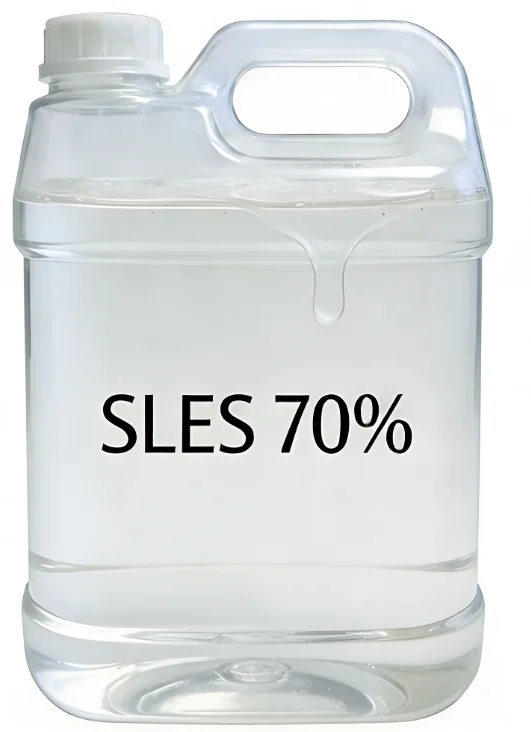
| Sodium Laureth Sulfate (SLES) | Very High | Better than SLS | Moderate | Shampoos, cleaners |
When it comes to customization, SDBS offers decent flexibility in concentration and co-formulation with nonionics or amphoterics to tweak foam stability or mildness. I remember a project for a detergent manufacturer where we adjusted the SDBS ratio to reduce irritation while maintaining cleaning power — quite a balancing act! It's a reminder that chemistry isn’t just science; it’s often art mixed with experience.
On the quality control front, SDBS batches generally undergo rigorous testing, including active matter content, pH measurements, and stability under storage conditions. You want a consistent product because variations can cause unpredictable results in consumer formulations. This is why sourcing from trusted suppliers is crucial. Speaking of which, the team I collaborate with at ZJSLES provides reliable, high-grade SDBS, and their technical support often saves us a headache or two during scale-up.
To wrap this up with a little real-world flavor: a local cleaning product company recently shifted to SDBS for their heavy-duty degreasers. Their feedback? Improved performance and better user acceptance — they spotted fewer complaints about residue or harshness. Wins like that underline why, after years, this surfactant keeps earning its spot.
In the end, Sodium Dodecyl Benzene Sulfonate is one of those ingredients you don’t often hear about by name, but its impact is everywhere. Whether you formulate detergents or emulsifiers, understanding its nuances pays off.
References:
1. Industrial Surfactants Handbook, 3rd Edition, 2021.
2. ZJSLES Technical Data Sheets.
3. Personal experience and client feedback, 2010-2024.